
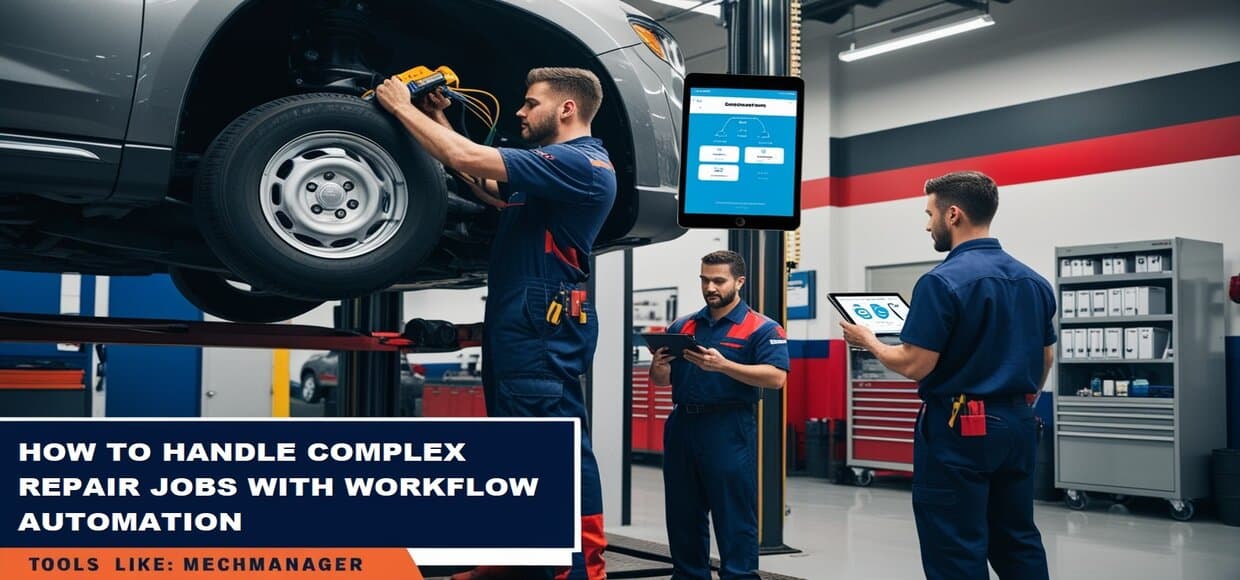
Repairing modern vehicles is a demanding task, particularly when dealing with complex jobs that involve advanced diagnostics, specialized parts, and meticulous coordination. The solution? Workflow automation. This approach can transform how your garage handles challenging repairs, improving efficiency, accuracy, and customer satisfaction. In this article, we’ll explore how to implement workflow automation in your repair shop, making complex jobs manageable and profitable.
What is Workflow Automation in Garage Management?
Workflow automation in garage management refers to using software tools to streamline and standardize repair processes. By automating repetitive tasks, assigning responsibilities, and tracking progress, garages can manage complex repair jobs more effectively.
Key Components of Workflow Automation:
1. Automated Task Scheduling: Assign tasks based on technician availability and expertise.
2. Real-Time Tracking: Monitor the status of each repair job.
3. Integrated Systems: Connect diagnostics, inventory, and customer communication platforms.
4. Custom Alerts and Notifications: Keep everyone informed of critical updates.
Challenges in Managing Complex Repair Jobs:
Handling complex repairs often involves numerous hurdles:
Coordination Issues: Multiple technicians working on the same vehicle may struggle without clear communication.
Inventory Delays: Missing or incorrect parts can stall progress.
Human Error: Missteps in diagnosis or execution can lead to rework.
Customer Communication: Keeping clients informed is often overlooked in the chaos of repair jobs.
Features of Workflow Automation for Complex Repairs:
Modern workflow automation tools address these challenges with the following features:
1. Task Assignment: Automatically delegate tasks to the right technicians based on their skills.
2. Diagnostic Integration: Directly import data from diagnostic tools into the repair workflow.
3. Inventory Syncing: Automatically check stock levels and trigger orders when parts are low.
4. Customer Updates: Send automated notifications about repair progress.
Using MechManager for Workflow Automation:
1. MechManager, a cutting-edge garage management software, offers powerful tools for automating workflows.
2. Customized Workflows: Tailor processes to suit specific repair types.
3. Real-Time Coordination: Enable seamless communication between teams.
4. Templates for Repair Orders: Standardize task checklists and invoicing.
5. Performance Analytics: Use data insights to optimize future repairs.
Enhancing Accuracy in Diagnostics and Repairs:
Workflow automation minimizes human error by:
- Automatically integrating data from diagnostic tools.
- Standardizing repair procedures with step-by-step checklists.
- Using predictive analytics to identify potential issues before they occur.
Improving Customer Experience with Automation:
Workflow automation doesn’t just benefit technicians—it significantly enhances the customer experience.
1. Real-Time Updates: Customers receive timely updates on repair progress.
2. Transparency: Accurate estimates for cost and time ensure no surprises.
3. Easy Follow-Ups: Automated reminders for maintenance improve long-term relationships.
Addressing Challenges in Workflow Automation:
While workflow automation is transformative, it’s essential to address certain challenges:
1. Initial Setup Costs: Budget for software purchase and customization.
2. Team Training: Ensure staff are comfortable using the new tools.
3. System Adaptability: Regularly review workflows to align with changing needs.
Future Trends in Workflow Automation for Garages
The future of workflow automation is exciting and full of possibilities:
1. AI Integration: Automatically predict service needs and recommend solutions.
2. IoT Connectivity: Enable real-time data collection from vehicles for better diagnostics.
3. Advanced Analytics: Leverage machine learning for continuous improvement.
FAQs on Workflow Automation in Complex Repairs:
1. What is workflow automation in a garage setting?
Workflow automation streamlines tasks, manages resources, and tracks repair progress automatically.
2. How does automation handle complex repairs?
By standardizing workflows, integrating tools, and ensuring real-time updates.
3. Can automation improve customer communication?
Yes, by providing timely notifications, transparent estimates, and easy feedback options.
4. Is workflow automation expensive to implement?
While there are initial costs, the ROI through efficiency and customer satisfaction is substantial.
5. What tools can I use for workflow automation?
MechManager and similar software solutions offer extensive automation features.
6. How do I train my team for automation?
Start with workshops, hands-on practice, and ongoing support from your software provider.
Conclusion
Workflow automation is a game-changer for repair shops handling complex jobs. Tools like MechManager enable garages to streamline operations, reduce errors, and deliver outstanding customer service. By adopting automation, you can transform challenges into opportunities, driving your garage toward greater efficiency and success.
Boost your workshop efficiency with MechManager. Learn more about our comprehensive garage management solutions at mechmanager.com or Schedule a demo. Explore related articles: Link to related blogs.