
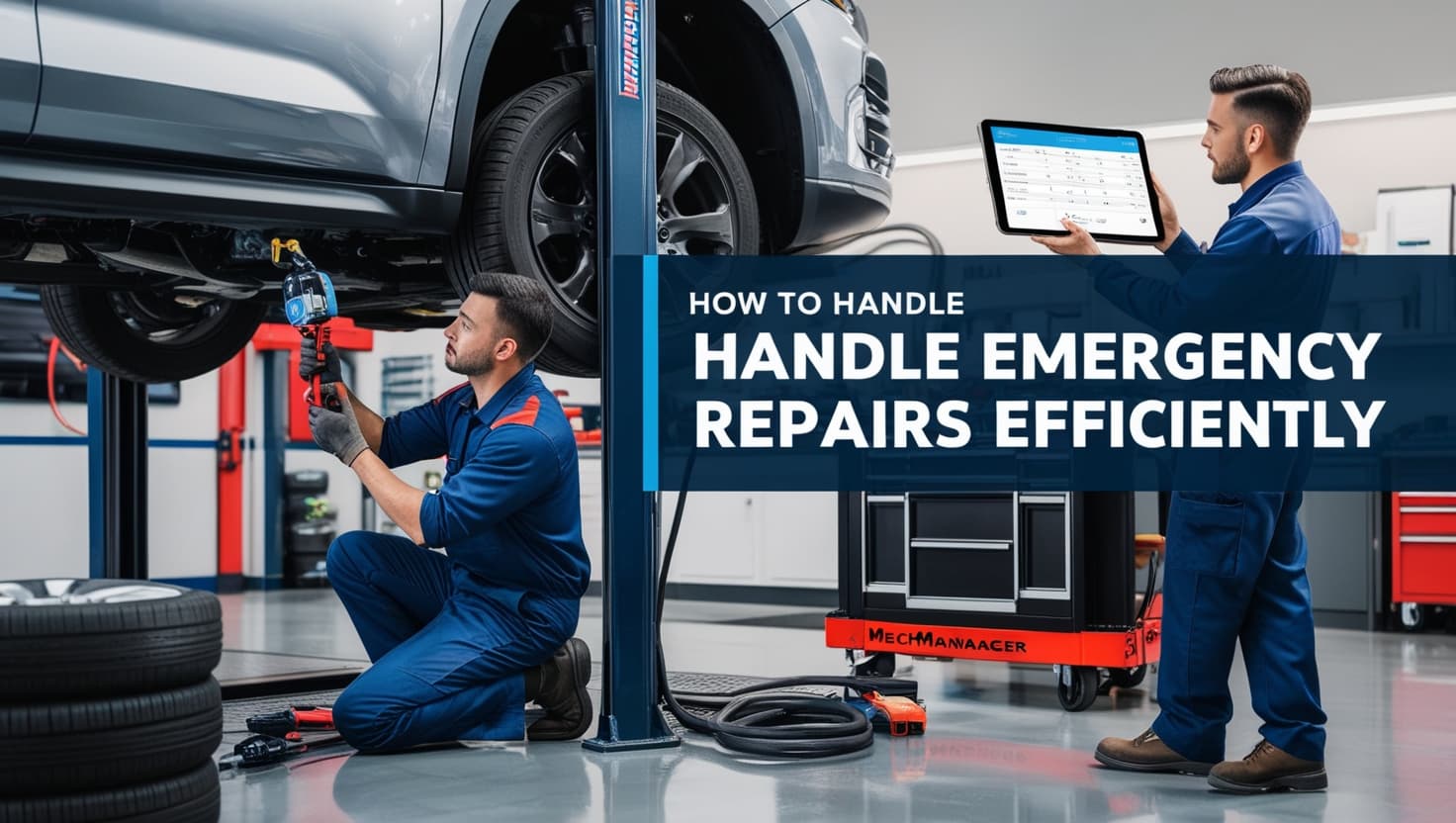
In the world of automotive repair, emergency jobs are inevitable. Whether it’s a last-minute breakdown or a vehicle in critical need of immediate attention, handling emergency repairs efficiently is crucial for maintaining customer satisfaction and minimizing disruption to your shop’s operations. By adopting the right strategies, tools, and workflows, you can address urgent repairs without compromising the quality of service or your team’s productivity.
1. Prioritize Clear Communication
When an emergency repair arises, effective communication between your team and the customer is the foundation of a smooth process.
Steps for Clear Communication:
i. Gather All Necessary Information: Ask the customer detailed questions about the issue to understand the urgency and scope of the repair.
ii. Set Realistic Expectations: Communicate timelines, potential costs, and the repair process clearly to avoid misunderstandings.
iii. Assign a Point of Contact: Designate a service advisor to provide updates and ensure the customer feels informed throughout the repair.
Clear communication builds trust and ensures that everyone is on the same page, minimizing delays and confusion.
2. Streamline Job Scheduling
Fitting emergency repairs into your schedule can disrupt planned jobs if not managed carefully. Efficient scheduling ensures urgent tasks are addressed without derailing your daily operations.
Best Practices for Scheduling Emergency Repairs:
i. Use a Digital Scheduler: Tools like MechManager allow you to manage appointments in real-time, making it easy to slot in emergency repairs.
ii. Maintain Buffer Time: Always leave some flexibility in your daily schedule to accommodate unexpected jobs.
iii. Reassign Non-Urgent Jobs: Identify less time-sensitive tasks that can be delayed to free up resources for the emergency repair.
By leveraging technology and building flexibility into your schedule, you can handle emergencies without disrupting the rest of your shop’s workflow.
3. Organize Your Team for Efficiency
Having a well-coordinated team is essential for managing emergency repairs effectively. Assigning the right people to the right tasks can speed up the process and ensure high-quality results.
How to Organize Your Team:
i. Designate Emergency Repair Specialists: Train specific technicians to handle urgent repairs, as they’ll develop expertise in diagnosing and fixing issues quickly.
ii. Promote Team Collaboration: Encourage technicians to work together on complex emergencies to complete repairs faster.
iii. Use a Task Management System: Tools like MechManager help track who’s working on what, preventing overlap and confusion.
A well-organized team ensures that emergency jobs are completed efficiently without sacrificing quality.
4. Ensure Your Inventory is Well-Managed
A well-stocked inventory is critical for handling emergency repairs without delays. Waiting for parts can turn a quick fix into a prolonged repair, frustrating both your team and your customer.
Tips for Effective Inventory Management:
i. Monitor Stock Levels Regularly: Keep track of frequently used parts and ensure they’re always in stock.
ii. Maintain a Critical Parts List: Identify high-demand or commonly required parts for emergency repairs and prioritize their availability.
iii. Work with Reliable Suppliers: Build relationships with vendors who can provide same-day or next-day delivery for urgent parts.
iv. Leverage Digital Tools: Use inventory management software like MechManager to track stock levels, set reorder alerts, and ensure you have what you need.
By keeping your inventory organized and accessible, you can minimize downtime and complete emergency repairs promptly.
5. Optimize Diagnostic Procedures
Time is of the essence during emergency repairs. Fast and accurate diagnostics are essential to determine the issue and begin the repair as quickly as possible.
How to Speed Up Diagnostics:
i. Invest in Advanced Diagnostic Tools: Modern diagnostic systems can quickly identify error codes and pinpoint issues.
ii. Use Service Histories: Tools like MechManager provide access to past repair records, helping technicians understand the vehicle’s history and identify recurring issues.
iii. Standardize Diagnostic Checklists: Create a step-by-step checklist for common emergency scenarios to streamline the process.
Efficient diagnostics reduce guesswork and enable technicians to begin repairs sooner, improving turnaround time.
6. Maintain a Calm and Professional Environment
Emergency repairs can create stress for both your team and your customers. Maintaining a calm, professional atmosphere ensures the situation is handled efficiently.
Strategies to Stay Calm Under Pressure:
i. Follow Established Procedures: Rely on standard workflows to reduce confusion and ensure consistency.
ii. Keep Communication Open: Regularly update your team and the customer about progress to prevent misunderstandings or frustration.
iii. Avoid Overloading Your Team: Ensure that technicians working on emergency repairs aren’t overwhelmed with additional tasks.
A composed approach not only speeds up the repair process but also reassures the customer that their vehicle is in capable hands.
7. Leverage Technology for Seamless Management
Digital tools like MechManager can significantly enhance your ability to handle emergency repairs efficiently. By centralizing job tracking, communication, and inventory management, these tools help you stay organized and responsive.
How MechManager Supports Emergency Repairs:
i. Real-Time Scheduling: Quickly slot in emergency jobs without disrupting pre-planned tasks.
ii. Instant Updates: Provide technicians with up-to-date information on the job, ensuring smooth transitions and minimal downtime.
iii. Service History Integration: Access detailed repair histories to diagnose and resolve issues faster.
iv. Customer Communication: Send automated updates to customers, keeping them informed about progress and expected completion times.
By incorporating MechManager into your shop’s operations, you can handle emergencies with precision and confidence.
8. Post-Repair Analysis and Improvement
After completing an emergency repair, take time to evaluate how the process went. Identifying areas for improvement can help you refine your workflows for future emergencies.
Steps for Post-Repair Analysis:
i. Review Timelines: Analyze how long each step of the repair took and identify bottlenecks.
ii. Gather Feedback: Ask technicians and customers for input on how the repair process could be improved.
iii. Update Procedures: Incorporate lessons learned into your standard operating procedures to enhance efficiency.
Continuous improvement ensures your shop is better prepared for the next emergency repair.
Conclusion
Handling emergency repairs efficiently requires a combination of clear communication, effective scheduling, organized teamwork, and reliable tools. By adopting best practices and leveraging technology like MechManager, you can tackle urgent repairs without disrupting your workflow or sacrificing quality.
With the right approach and resources, your shop can handle emergencies seamlessly, earning customer trust and boosting your reputation as a reliable service provider.